Tuesday, October 28, 2014

Zombieland (2009)


It seems like ever since Danny Boyle's 28 Days Later and Robert Kirkman's The Walking Dead hit theaters and book stores around the same time, the zombie genre has experienced a revival of overly saturated proportions. Then, in 2004, Edgar Wright and Simon Pegg came onto the American scene with their zombie comedy Shaun of the Dead. This might be the root of a strange divergence of the zombie genre. Since then, we've seen a spike on zombie comedies as well - everything from the fake documentary American Zombie to the current Life After Beth. We've even seen them try and make zombie romances (has anyone seen Warm Bodies?) 

While I haven't seen Life After Beth yet, it's safe to say that no movie even comes close to the fun, humorous, and entertaining nature of Shaun of the Dead than Ruben Fleischer's 2009 comedy Zombieland. Yet even that survives primarily on two factors: that it's got zombies and that you presumably think discount awkward Michael Cera is funny. 

This isn't to say Zombieland is a bad movie. It is filled with some pretty funny moments and some memorable scenes. And it's one of the more entertaining Woody Harrelson roles. Yet the gist of the movie is essentially, "What if we made an awkward teenage comedy, but with zombies!" Naturally, it lacks even a sliver of the kind of depth and thematic significance you can find in Wright's pictures, writers Rhett Reese and Paul Wernick occasionally try to tie in something of substance or metaphor sporadically throughout the movie. The problem is that they lack the tact that other writers have, often simply coming right out and stating it. At one point, Columbus (Jesse Eisenberg) comes right out and says that if you don't have anyone around, you might as well be a zombie.

Groan. 

Emma Stone deserves a bit better than merely being the "hot chick" that the "awkward boy" is trying to bang. Seems like she had to suffer through a few of those roles to get the better ones later. 

Then there's the whole subplot of Tallahassee's backstory, where he tells his story about how much he loved his puppy before the zombies ate him. This coincides with a corny flashback sequence that does little to cover the reality that he was actually talking about his son, not a puppy. When they finally spill it out for you, they replay those scenes but with a little child instead of a puppy. Problem is that most of those scenes make no sense with a puppy in them to begin with, so by the time you get the big reveal, it's already been pretty obvious to begin with. 

Even worse are the moments when the jokes feel every bit as forced as the relationship development. The worst offender is perhaps the Bill Murray scene - one of the funniest, most exciting surprises in any movie I'd seen. And it all culminates to Murray lying there dying so that one character can randomly ask, "So, do you have any regrets?" With the punchline being, "Garfield, maybe." 

Not every joke is horribly jammed in there with clunky writing, of course. While Eisenberg's awkwardness is a bit tedious (remember, this came at a time when he and Cera were vying for "awkward teenage boy" supremacy), some of his reactions or lines are pretty great. The way he delivers the line, "You almost knocked over your beer with your knife" when he first meets Tallahassee is spot on and hilarious. Perhaps the best joke is one of the most subtle. When picking a celebrity house to stay in, Tallahassee picks Bill Murray's. He hopes that Murray will have a box of Twinkees somewhere (another subplot jammed in there for the sake of a couple of jokes). When they don't find any, Wichita shouts over everyone, "I told you we should have gone to Russell Crowe's! Nobody ever listens to me!" 

The other issue plaguing the writing is that it struggles to get out of this immaturity. Often times, it feels like a movie written by sexually frustrated 19 year old dudes. Rather than focusing on the idea of an awkward kid who had been isolated before the apocalypse and is now making a human connection, they spend much of the movie focused on trying to score with a hot chick. For as clever and capable as Wichita (Emma Stone) is, she only really serves as a quest for Columbus. They spend so much of the film making her seem more capable and in charge and him weak and frightened, they naturally end the film by making Wichita a damsel in distress in need of rescuing by Columbus, who proves his worth by overcoming his fear and shows his strength. And the only reason he was able to do so was that he fell in love with her. It's cheesy and poor motivation. I know the movie loses something if you remove the romantic element - since after all, nothing says "awkward" like the inability to score with girls - but it would have been profoundly more interesting if they were just four human beings carrying their own baggage and learning to trust and like each other. (This romance element is also made worse by the fact that Wichita is also one of those "I'm hot and I'm gonna take advantage of you awkward dudes" characters that is borderline insulting to both women and nice, awkward guys.)
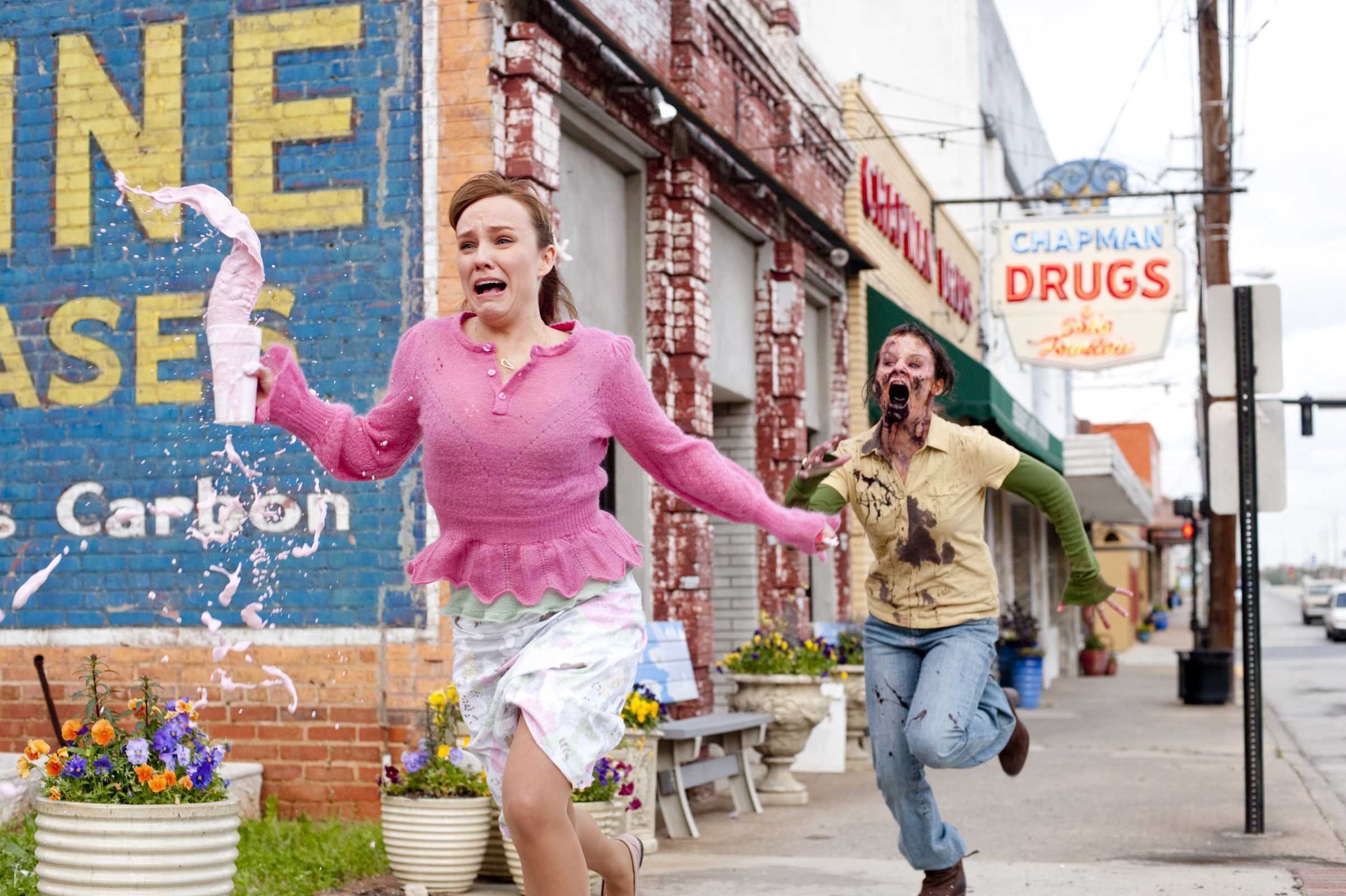
Zombies look good when they show up. But I forgot that they run. God damn I hate running zombies. Not so much a huge issue in this movie though. 

At times, the movie can't decide what exactly it wants to be or how it wants to tell its story. It occasionally utilizes prolonged flashbacks with narration explaining everything. Then, there are occasional cuts to the "Zombie Kill of the Week," which highlights some unrelated character somewhere in the world killing a zombie in a totally ridiculous and possibly humorous way. It's unnecessary and confusing, and really just chops up the already broken up flow of the story. 

So ok, the comedy is hit or miss. The drama is forced and eye-roll worthy. But what about the action? What about the zombies? What about the special effects?

Two things become apparent halfway through the movie. The first is that it has a pretty small budget. It doesn't take long before you start to realize that there don't appear to be many zombies in Zombieland. Here's this world supposedly overrun by them, yet even when they stop in downtown Los Angeles, the most they can muster is seven zombies on screen at once. Tallahassee and Columbus stroll through the center of a small town looking for a car, chatting away like there's nothing around them. Strange thing is, there's nary a a zombie in sight. When they enter a super market, there's all of three zombies. At the Native American store? There's a whopping one. You never see zombies in the background and the characters don't seem at all concerned. They make as much noise as they'd like. In one scene, Tallahassee literally just shoots guns in the air for no reason for a minute, just because. Doesn't draw the attention of a single zombie.

The other thing though is that when there are zombies, they look pretty great. It seems as though they had to choose between quantity and quality. The zombies themselves look awesome and terrifying. And it also seems like they were ultimately saving up for the big final set piece at the amusement park (which is freaky and very entertaining, despite its Left 4 Dead 2 level rip off). Yet even then, the only time they try and overwhelm you with numbers of zombies, those numbers still seem pretty limited. 

Overall, it's not as good as I remembered it being. Perhaps that awkward teenage boy trying to score with the hot chick is just no longer my sense of humor. Perhaps I'm fatigued with zombies. Or perhaps I just never really noticed how forced the writing really was. Still, it's not filled with nothing. There are a number of funny jokes and memorable sequences. And the zombies looked good when they do show up. They effectively use jump scares at a few bits. 

Still, if you're going to watch a good comedy and a good zombie movie this Halloween, you can't top Shaun. 


Sunday, October 26, 2014

Dear White People (2014)


PREFACE: I do mention a few specific plot elements that are SPOILERS. Not sure if people care about spoilers in a movie like this, but be warned they're there. Especially when we get past the racist party.

PREFACE 2: Worth noting, I guess, that there's pretty much no element of my identity that isn't part of the "majority." Straight, white dude who was working/middle class (depending on whose definition we're using - suffice it to say we weren't poor) and had a Catholic upbringing. Shoot, even the one thing that USED to be a minority identifier - being a comic book and video game nerd - is now mainstream pop culture.

Point being: probably worth it to take my opinion with a grain of salt. Not saying my opinions are somehow invalid as a white man watching the movie, but I don't have much insight in the "black community." I'd definitely be interested to see what black people thought of the movie and if they felt similarly or totally different. Or, if anyone thinks I'm totally off-base. This is just what I took out of it with what I generally thought going in. In general, I'm a big fan of diverse perspectives in media, so any time I get a main black or Latino or female character who isn't Tyler Perry in drag or a drug dealer or a mere love interest/goal for hero to accomplish, I'm always more interested.

ONWARD!

Race has a knack for being an issue that we all would benefit from having an open and honest conversation about while also actually listening to the other people who have had different experiences with it. In the case of the provocatively named Dear White People, director Justin Simien tries to give viewers some sense of what many black Americans feel like in today's world. That's what makes it something of an important film. It's a rare story told through a black lens about black experiences on their own terms. And it's surprisingly insightful, especially when hearing Simien talk about how many things were inspired by his own personal life experience.

In an age where Barack Obama has become President, black people find it almost more difficult to have their perspectives heard or understood. Taking place at a fictional ivy league school predominantly made up of rich white kids, one such student goes so far as to suggest that the hardest thing to be in today's work force is a white, middle class male (which could have felt like a forced line of douche baggery in the film if not for the fact that I've heard this argument by an annoying number of people in real life). He goes on to even suggest that the primary reason Obama is president is that he benefited from affirmative action.  Even the president goes so far as to say, "Racism is dead in this country." To his black colleague, no less.

Primarily focused on following Sam White, a young black woman who is militant in her racial identity and hosts a school radio program called "Dear White People," she regularly pushes people's buttons. "Dear white people," she says in one radio show. "Dating a black man to piss off your parents is itself a form of racism." At other times, she's merely mocking. "Dear white people with Instagram: you go on hikes. We get it." Sometimes she's funny. Sometimes she's trying to point out microaggressions that a lot of people just ignore as being "no big deal." She's the one who is openly controversial in her anarchist persona, willing to set fires to make a point.

Hers is not the only perspective in the feature, however. There's also Colandrea Conners, a young black woman who is trying to get onto a reality television show. Her thing seems to be wanting people to notice her, and she often seems to reject her "blackness" in order to fit in. She's also taken to calling herself Coco, because her real name Colandrea "doesn't pass the resume test." (Basically meaning she is concerned that if people were know she's black before they have a chance to even meet her, that will set up a different experience when they do.)


There's also Troy Fairbanks, the hot shot black student politician who seems to know how to play to a crowd. He is the son of  the Dean of Students. Liked by black and white students, he is essentially seems to "play it safe."  Finally, there's Lionel Higgins, a gay black journalist wannabe who is so much struggling to find his place that the film makers don't even really let him have a home. He's shopped around housing as he goes from a house of predominantly white kids bullying him to a house of predominantly black kids bullying him. Lionel is calm and nice, often acting as a wallflower. Yet no matter how much he tries to avoid it, he still gets caught in the racial divide between the pompous Kurt Fletcher and Sam White. Even his new friends at the school paper make him uncomfortable and don't seem to care about him, really.

What's really interesting about these characters is that the don't just shine a light on the black experiences in a predominantly white environment. They also reflect that racial identity even among black people. Each and every one of these four main characters is also struggling with some issue within their own black community. Sam, for example, is romantically involved with a white man, but she's too scared to share that fact with the public. He even calls her out on it at some point, calling her out on feeling the need to "pick a side" when really, it wasn't as clear cut as that. Sam, whose mother was black and father was white, even points it out herself when she finally admits that she remembered the looks people gave her father when they'd see him with this little black girl. She hated those people for trying to make her father feel embarrassed or ashamed, yet there she was, trying to appease those same people who would be giving her looks for dating a white man.

Coco is overly concerned that people only see her as a black woman, then tries to take advantage of people's interest in "black culture" to her advantage. Troy tries to be the "chill black guy" with his white friends, trying to show that he's not easily offended by their ignorance. But his race is perhaps not as big of a deal to him as it is to other people. He's also something of a pawn for his father. His father was offered the position of Dean of Students after graduating second in his class. The person they made president instead of him was a white student who barely passed. Since then, he's been training his son to be completely elite and forcing him to live a life in which no one can possibly deny him any promotion or job. (This, coming at the expense of his son's desire.)


Most interesting of the bunch though is Lionel. He's the ultimate outsider. He's black and doesn't fit in with the white kids. But he also doesn't really fit in with the black kids either. Both black and white students joke with him about not "really" being black. One white student even says, "You're only technically black." The black kids don't say it outright like that, but they're certainly all implying it. Lionel struggles the most with his identity and finding his place as a gay black man. Even people who seem open to him are ultimately up to no good though. It's sad and heartbreaking, and he serves as something of a mirror on "black culture." At one point, Lionel and Troy bond over Troy's secret love of Star Trek (which he publicly denies, presumably because that's "not what black people are into.") That's what makes the feature compelling. It's not just about black students finding a place in a white world. Each of them is struggling to find their place in their black one as well.

The movie itself sometimes struggles to find itself as well. The first act builds it up to be a quirky indie comedy, complete with hyper stylistic title cards and transitions. Come the second act, however, it's trying more to force the issue. From start to finish, it's focus is primarily on microaggressions against black people. These are seemingly little things that contribute to making black people feel uncomfortable. It's things like saying, "You're only technically black." It's things like asking to touch someone's afro hair style, and doing so before he or she can even answer. And it's the way black people are portrayed on film and in television. Yet there's also a more serious perspective as well. Simien does give examples of more blatant issues as well, whether it's the issue of the Dean and the President, or if it's Kurt Fletcher's intangible disdain for Troy and making him jump more hoops than other people to get into the club.

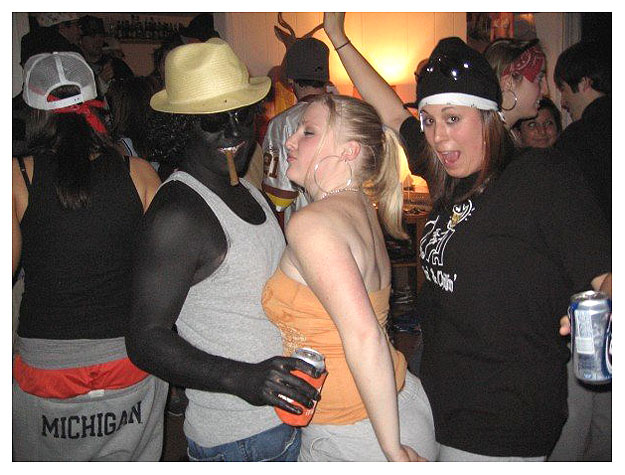
It culminates in a Halloween-themed party thrown by a house of primarily white students in which the theme is dressing up and acting like black people. What ensues is a party of epic ignorance, as people show up in blackface, wear fake afros, cover themselves in gold chains and bandanas and wife beaters, and have a freestyle contest. Suffice to say, it's pretty racist. It's so much so that it coaxes passive Lionel into action. This event would seem completely absurd (and it is) if not for the fact that it was inspired by real world events, as these very parties started popping up at several colleges around the country - including Dartmouth.

Note: This is NOT from the movie. This is from a real college party... Can't make this shit up.


The story surrounding the fictional party, however, leaves the viewer with a few philosophical questions to deal with. On the one hand, as much of an ignorant jerk Kurt was, he wasn't lying that he cancelled the party. He had no real intentions of throwing it. Even when the idea first popped up, he was the only one to have enough sense to ask, "Can we do this?" It's one of the few moments you realize that for all his ignorance and racial insensitivity, he's also not a complete idiot and jerk. It turns out that the party was provoked and invites got sent by the radical Sam. On some level then, it seems like this party wouldn't have happened if Sam didn't throw everything in motion to begin with. Her argument, and rightfully so, is that it never should have happened whether invites were sent or not. She argues that when people got those invites, they should have been disgusted. Instead, many people covered themselves in blackface and fake afros and headed over anyway.

Overall, the film struggles at times with what tone it wants to take and with its pacing. The Sam/Gabe love story could have had more screen time and relevance throughout the film (Gabe, by the way, looks a bit like a cross between Jim Halpert and Andy Dwyer). It's also refreshing to just get different black perspectives out there at all. As Sam points out before taking the stage for her campaign speech, "We live in a world where Big Mama 3 exists."

Saturday, October 18, 2014

Movies Worth Checking Out #1

Movies aren't necessarily my go-to medium of story-telling. I'm more of a video game guy. But I still watch a lot of movies. I go through a lot of films in a relatively short period of time, so I don't always have a lot of time to really follow up with a write up. Every once in a while, I'll try and post a list of five or so films that I've seen recently that I loved and felt were interesting enough to check out. Not to steal a page from the Extra Credits YouTube folks, but I can't necessarily promise these films are good; only that I found them interesting in some way. Most likely, these will be films that I either am biased to love or am unsure how to feel about them.


1. Last Night (1998)


How would you want to spend your last moments if you knew with absolute certainty that the world was going to end at midnight? Last Night shows us how a select few characters would choose to do so, while showing us the chaos that might ensue in the moments leading up to it.

Directed by Don McKeller and starring Sandra Oh, David Cronenberg, Don McKeller.

What I Loved: The ending. Without spoiling, it's exactly how I want more movies to end. (I had to stop writing my take on Miracle Mile because this fixed my major gripe with that movie.) 


*On Amazon Instant. 


2. I Know That Voice (2013)


Voice acting might be one of the most under appreciated jobs in the entertainment business. The school of thought from a lot of people is that if you can act on film, you can voice act. But as an anime/cartoon/video game fan, you can trust me that that most certainly isn't the case. Voice actors like Troy Baker, Steve Blum, and Jennifer Hale are sometimes one of the biggest reasons we grow attached to these animated characters. This documentary follows several of the big names, including John DiMaggio, who is almost literally everywhere. (Bender from Futurama is the big one.) 

Directed by Lawrence Shapiro and starring John DiMaggio, Kevin Conroy, James Arnold Taylor, Tara Strong, Billy West, Seth Green

What I Loved: The insight into an industry that I'm aware of that many others aren't. Always nice to see these people get some attention.


*On Netflix Instant.


3.  Mood Indigo (2013) 


A visually creative and stunning film from the mind of Michel Gondry, the film follows young Colin as he decides to shed his loneliness and becomes infatuated with Chloe. But what starts as a happily-ever-after type affair ends up suffering from a series of terrible occurrences. Colin must use all of his money to try and cure Chloe of a flower growing in her lungs.

Directed by Michel Gondry (Science of Sleep, Eternal Sunshine of the Spotless Mind, Be Kind Rewind and starring Roman Duris, Omar Sy, Audrey Tautou.

What I Loved: I loved the entire final act, which was not at all where I was expecting it to go based on the trailer.


* in select theaters


4. Sleepwalk With Me (2012)


Comedian Mike Birbiglia turned his real life experiences with a doomed relationship and REM Behavior Disorder into a stand up routine, turned it into a better one-man show, then turned it into a book, and finally - with help from the folks of This American Life - adapted it into a film. Birbiglia (who also directs) actually shows a bit of nuance in the way he directs, using himself narrating the events in the same way as he presents his one-man show while showing humorous dream sequences. The film feels just as personal as his original stories that pushed him into public view when he was on several episodes of This American Life.

Directed by Mike Birbiglia and starring Mike Birbiglia, Lauren Ambrose, James Rebhorn, and Carol Kane.

What I Loved: I mean, it's a great humorous and heartbreaking story. Admittedly, it loses a little of its comedic power if you're familiar with the story, but it's a surprisingly well crafted and unique film adaptation.


* on Netflix Instant


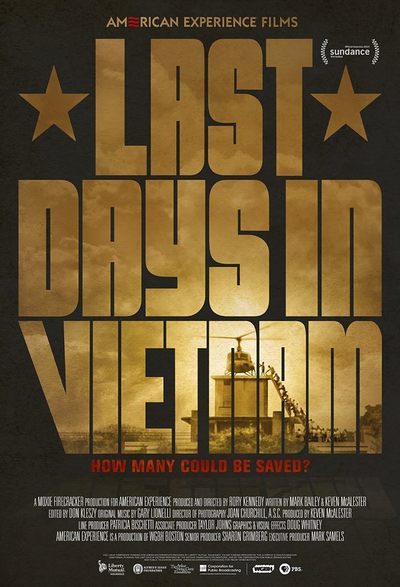
5.  Last Days in Vietnam (2014)


I admit to having a taste for documentaries, hence this being the second on the list. The Vietnam War was a dark spot on America's history, but every side in the debate had a knack for removing human lives from the equation, especially Vietnamese lives. Last Days of Vietnam focuses exclusively on the final month or so of the American existence in Saigon, up to the very last helicopter. In particular, it shows how desperate people were to get out of South Vietnam as the communists encroached on the nation, confidently marching toward Saigon. It's a film that simultaneously makes you feel completely ashamed of the United States for going in, messing things up more, then completely abandoning the people and leaving them behind to get slaughtered, while also making you feel extremely proud of our actual troops who were there. The documentary tells a number of stories about US soldiers, seamen, and airmen who disobeyed orders and ran black op missions to help endangered Vietnamese citizens and their families escape the country.

Directed by Rory Kennedy

What I Loved: Vietnam is filled with ugliness, and this story is no exception, but it was somewhat helpful to hear stories about people who stepped up and shined when it got extraordinarily dark and bleak. Vietnam is one of the most complex and misunderstood wars in American history, so it was nice to see examples of the worst of our politicians with the best of our troops.


*in theaters


Tuesday, October 7, 2014

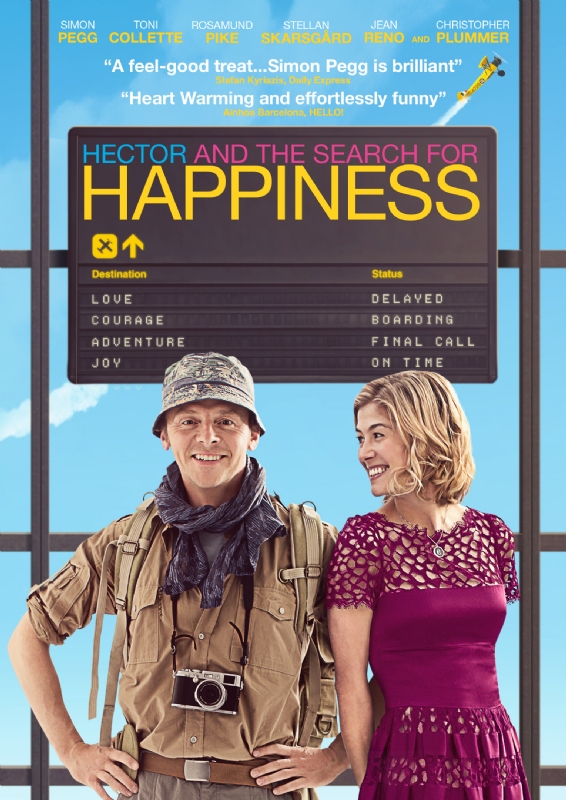
Hector and the Search for Happiness (2014)


Not going to lie, I'm not quite sure what to make of Hector and the Search for Happiness. Part of me wants to say that it is straight up asking the question, "Can Simon Pegg's presence alone carry a film?" But then, part of me feels like it was a cornier, less compelling take on The Secret Life of Walter Mitty.  Thing is, the film also has Rosamund Pike carry a few scenes as well, so it's not like it's a bad cast or poorly acted. It's just... I'm not entirely sure what to make of it.

Seemingly taking a page from The Secret Life of Walter Mitty, this is the story of a bland man going nowhere and just going through the motions. One day, he randomly gets the idea in his head that he needs to take a trip and go on an adventure. Not so much to "find himself" as much as it is to "study what makes people happy," so he can better help his patients. Of course, there are as many ideas about what is happiness as there are individuals, and Hector (Pegg) tries in vain to find that one quick, simple answer. 

Splice between his nerdy drawings and lame attempts to sum up happiness in one neat, fortune cookie sentiment, we get strange montages. Some of them kind of make sense, set to stylish music to indicate the fun time Hector is having. Other times, we get strange dream sequences giving us a glimpse into what might actually frighten him or showing things he had lost or left behind. Sometimes, we even flash back to things we just watched half an hour ago, seeing how that now fits in. At times, it feels pretentious, convoluted, and unnecessary. At others, it feels quasi-significant. There are also some strange animations that occur, perhaps to break up the monotony of the map-trekking plot. 

Subtlety is not the film's strong suit either. The emotions Pike and Pegg show seem real enough (they are great actors, after all), but the film really tries to drive the message home that happiness is in the pursuit. It's that old cliche of fearing death means you never truly live. They so much as introduce a character at the very end to specifically state that outright. Christopher Plummer's appearance at the end is nice, but only really serves to hammer the point even further. Even Toni Collette's appearance as Hector's old flame and representative of a life not lived feels a bit forced. 

At times, both artsy and safe, I guess I'm just not ultimately sure how I felt. The acting is great - Pegg and Pike (who were equally excellent in the last of the Three Flavours Cornetto trilogy The World's End) could be in everything together and I wouldn't mind - but I'm not terribly sure the direction is all that great. Pegg's excellence shines through, especially in the comedic moments. Of course, I'm one of those rare people who loved The Secret Life of Walter Mitty, which is also flawed, but I think does a better job with having their titular character find what he's looking for more organically. 


Monday, October 6, 2014

The Skeleton Twins (2014)


Earlier this year, I got a taste of the Sundance Film Festival. For a few days, I eagerly awaited the movies I would not get into (because Sundance sucks and you can't get into anything unless you have a lot of disposable income). Granted, I saw three movies that I really liked - Frank, Young Ones, and Kumiko the Treasure Hunter - but the one film I desperately wanted to see (and couldn't get into) was The Skeleton Twins.

Don't be fooled by the casting of some of SNL's best cast members of the past 20 years, though. Yes, Bill Hader and Kristin Wiig co-star as estranged siblings reuniting, and sure, Luke Wilson appears as a really sweet dude-dude, but the film is not a comedy. To be sure, there are funny moments, but it isn't a comedy. In some ways, it plays a bit like Little Miss Sunshine in that it's a drama and comedy. A lot of studios have tried to make such films that can't be put into one box. Few were as successful.

The Skeleton Twins tells the story of Milo and Maggie, two siblings whose relationship fell apart after their father killed himself. They haven't spoken in ten years, even living on total opposite sides of the country. Milo (Hader) has a bad break up with his long time boyfriend and attempts suicide as well. Having failed, he's got no one to care for him except his sister Maggie (Wiig), who brings him back to New York to live with her and her husband Lance (Luke Wilson). Recovering and back where he grew up, Milo sets off to reconnect with an old teacher with whom he has an intriguing and morally ambiguous relationship. Maggie meanwhile sets off to sabotage her marriage.

Milo (Hader) and Maggie (Wiig) start off here as estranged siblings.

The structure of the film is quite wave like. Moments go by where the siblings are seen as connected only by blood. It's awkward and uncomfortable. Then a few scenes later, we see them starting to connect again, creating a heartwarming peak. And of course, that just serves to drive the drama later when that wave crashes again.

Dark and funny (but not a dark comedy), the film is one of the most honest stories out there. It might be trendy to say that - especially about smaller indie films - but it does feel genuine. In large part, this is because of Wiig and Hader, who straight up kill it in the film. Frankly, I would pay money to watch them just hang out for two hours. Presumably building off their real life relationship as friends and co-workers on Saturday Night Live, truly their performance is the strength and glue of the film. If their relationship didn't feel so natural, it would have been hard to buy into the idea that they aren't just connected by blood; that indeed they did once have a familial relationship and bond as well. The moments where the two can wing it and joke around comes off extremely naturally, further adding to the feeling that they are actually beginning to reconnect and grow their relationship.


And they end up here, as close family.

It's a mistake to say it only stands up as a film because of the cast, however. While clearly the primary strength, the writing is also solid. One of the best things the film does is avoid hammering exposition over the head. Nothing really gets spilled out plain and simple. For a long time, we are meant to guess at Milo's relationship with his former English teacher (played by Ty Burrell). We know that something happened, we can guess, but even when it all finally comes crashing down and Maggie fills us in on more of the details, it's still not a complete picture. The Skeleton Twins is a film that exercises restraint and lets the natural progression of the story and its characters fill you in, rather than having a sequence that holds your hand through all the back story. Another example, at the very beginning of the film when Milo tries to kill himself, all we really know is that he's sad, he keeps looking at a picture of him and presumably his boyfriend, and then blood! It doesn't need to tell us anything else. That is enough to know exactly what happened.

Some people might go into the film expecting more humor, given Hader and Wiig's appearance, but it's not a comedy. Personally, I loved it. It's heartwarming and heart breaking all at the same time. To my mind, it is one of my favorite films of the year.  It might be worth it alone for Hader and Wiig's epic lip sync performance. Still, I can see why it wouldn't be everyone's thing.

(And, ya know, I also was the only person in the world who loved The Secret Life of Walter Mitty, so...Take every opinion of mine with a grain of salt, I guess.)